
Passage (NIV): Isaiah 53:4-5 and John 20:19-22
Preacher: Mark Kingston
I made this little video back in 2019. What I remember most was the children. Scouts, Cubs, Guides and Brownies, all standing quietly around the war memorial, remembering people who had died long before they were born. I found it really moving. My boys both took part in this act of remembrance.
And then those words at the end, from the war cemetery at Kohima, in India:
“When you go home, tell them of us and say,
For your tomorrow, we gave our today.”
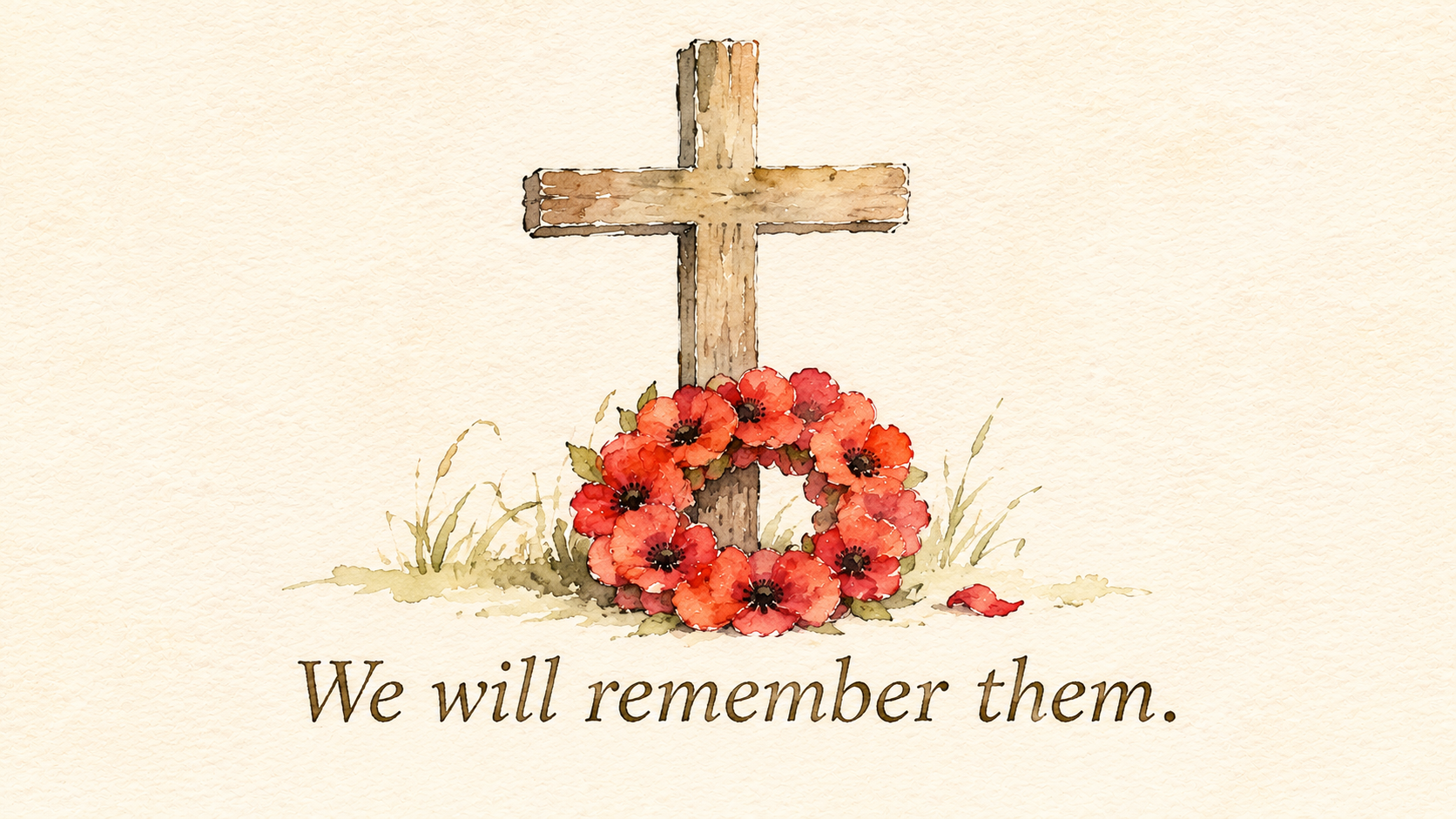
Behind every name on a war memorial was a real person. Someone with hopes and dreams. Someone who wanted to get home, see their family and get on with life. But they never got that chance. So today we remember them. We remember their courage, their sacrifice, and the freedom we enjoy because of what they gave.
But I've been wondering: is remembering enough? If people gave their lives for a more peaceful future, surely one of the best ways to honour them is to do what we can to make the world a more peaceful place?
And that brings me to Jesus.
Jesus came announcing God's kingdom. He wasn't talking about some faraway place. He was showing us what life here on earth looks like when God's will is done.
It's a very different picture from much of what we see around us. Instead of greed and injustice, we see generosity and fairness. Instead of the powerful taking advantage of others, we see people serving one another. The poor and vulnerable matter. Enemies are loved. Wrongs are put right.
The Bible has a wonderful word for this: shalom. It's more than just the absence of war or conflict. It's about peace, justice, healing and wholeness. Life as God always intended it to be.
And Jesus came to make it possible. Through his death and resurrection, Jesus won the decisive victory over sin, evil and death itself. But that raises an obvious question. If Jesus has defeated evil and death, why is there still so much suffering in our world?
Well, Jesus has won the victory, but the story isn't finished yet…
One day he will return and put everything right, once and for all. But until then, he's already at work bringing his peace and justice into our broken world. And here's the remarkable thing. He invites us to join him.
After his resurrection, Jesus appeared to his frightened disciples and said, “Peace be with you.” And then he told them, “As the Father has sent me, I am sending you.” In other words, Jesus was sending them out to carry on his work. Not to save the world themselves, but to follow him, stand against what's wrong, care for those who are hurting, and help make things right.
And that's our invitation too.
So where do we begin?
Of course, when we look at the world, it's easy to feel overwhelmed. Wars, poverty, injustice, broken relationships. What on earth can ordinary people like us do about all that?
Well, here's a thought. Three simple things we can all do.
1. Pray
Pray for peace. Pray for an end to war and suffering. Pray for justice. Pray for those who are struggling, for relationships that need healing, and for things that are broken to be made right.
But why pray? After all, God already knows about these things. He doesn't need us to remind him! Well…prayer isn't just about asking God to do things. It's also about growing closer to him. And as we spend time with God, bringing him the things that trouble us, he begins to change us too. We begin to care more deeply about what he cares about. We start to see the world, and the people around us, a little more like he does.
That's why Jesus taught us to pray, “Your kingdom come. Your will be done, on earth as it is in heaven.” We're asking God to make things right in his world. But we're also opening our own hearts to him, allowing him to shape what we care about and how we live. And that brings us to the second thing we can do.
2. Notice and discern
Start paying attention to what's happening around you. Who's struggling? Who's being overlooked? Where are people being treated unfairly? Where is peace missing?
Jesus noticed people, especially those everyone else seemed to miss. And as we follow him, I think he begins to change what we notice too. We begin to see people and situations we might once have overlooked.
But here's something important. Not every need we notice is something God is asking us to fix. We can't do everything, and we're not supposed to. So rather than rushing in, we need to bring what we notice to God and ask him for wisdom.
Here's a simple prayer you might like to try:
“Lord, I've noticed this person, this problem, this situation. Show me what you're doing here. And show me if there's something you'd like me to do too. Amen.”
That's it. Pay attention, pray, and listen. Ask God to help you see not just where help is needed, but where he might be inviting you to get involved.
3. Say yes
Sometimes, as we pray and listen, we begin to sense that God really is inviting us to do something. Perhaps we find ourselves particularly concerned about someone who's struggling, or troubled by something unfair happening in our community.
When that happens, don't just dismiss it. Keep praying. Talk to someone you trust. See whether others are sensing the same thing. And if you believe Jesus is inviting you to take a step, say yes.
It might be something small, like making a phone call, offering a meal, or welcoming someone who's been left out. Or it might be something bigger, like standing up against injustice or working with others to change things. And yes, it might cost you something. Your time, your comfort, perhaps even your popularity.
But remember, Jesus isn't asking us to save the world. He's already won the victory over evil, and he's at work making things right. He's inviting us to join him in what he's doing. And we don't have to do it alone. We have his Spirit, and we have one another.
Their tomorrow. Our today.
So let's return to those words from Kohima: “When you go home, tell them of us and say, For your tomorrow, we gave our today.” Well, here we are. We're living in their tomorrow. And now it's our turn to think about the future we're leaving to our children and grandchildren. What sort of world do we want them to inherit?
We can't solve all the world's problems. But we can follow Jesus, joining him in his work of bringing peace, justice, healing and hope into the world we live in. And I wonder what might happen, right here in Gibsons, if more of us took Jesus up on that invitation?
So let's honour those we remember today, not just with our words, but with the way we live: Pray. Notice and discern. Say yes. Three simple things. Three ways we can join Jesus in bringing more of God's peace and justice into our world.
I can't think of a better way to honour those we remember today.
